Zhengzhou Protech
Home > News

Product

Contact Us

Leave Message

Contact Us

All products are customizable, leave message immediately, we will reply as soon as possible.

Name

Tel/WhatsApp

E-mail *

Country *

Raw Materia

Message *

Verification code *

I can't see clearly, refresh

Key Technical Points of Electric Furnaces for Inorganic Material Sintering in University Laboratory

For your custom heating needs, reach us here:
I. Introduction: The Core Role of Electric Furnaces in Inorganic Material ResearchfrTMuffle Furnace,Tube Furnace,Vacuum Furnace,Atmosphere Furnac
In university inorganic material laboratories, sintering is a critical process for material forming and performance optimization. As the core equipment to achieve a controllable high-temperature environment, electric furnaces directly influence the microstructure, phase composition, and mechanical/chemical properties of samples such as ceramics, glass, and powder materials. Whether it is formula optimization in basic research or process scaling-up in application development, mastering the technical points of electric furnaces is a prerequisite for improving experimental efficiency and ensuring data reliability. This article systematically sorts out the core technical points of electric furnaces in inorganic material sintering from four dimensions: equipment selection, parameter regulation, operation specifications, and maintenance.frTMuffle Furnace,Tube Furnace,Vacuum Furnace,Atmosphere Furnac
frTMuffle Furnace,Tube Furnace,Vacuum Furnace,Atmosphere Furnac
II. Selection of Electric Furnaces: Matching the Sintering Requirements of MaterialsfrTMuffle Furnace,Tube Furnace,Vacuum Furnace,Atmosphere Furnac
1. Heating Method and Furnace Type SelectionfrTMuffle Furnace,Tube Furnace,Vacuum Furnace,Atmosphere Furnac
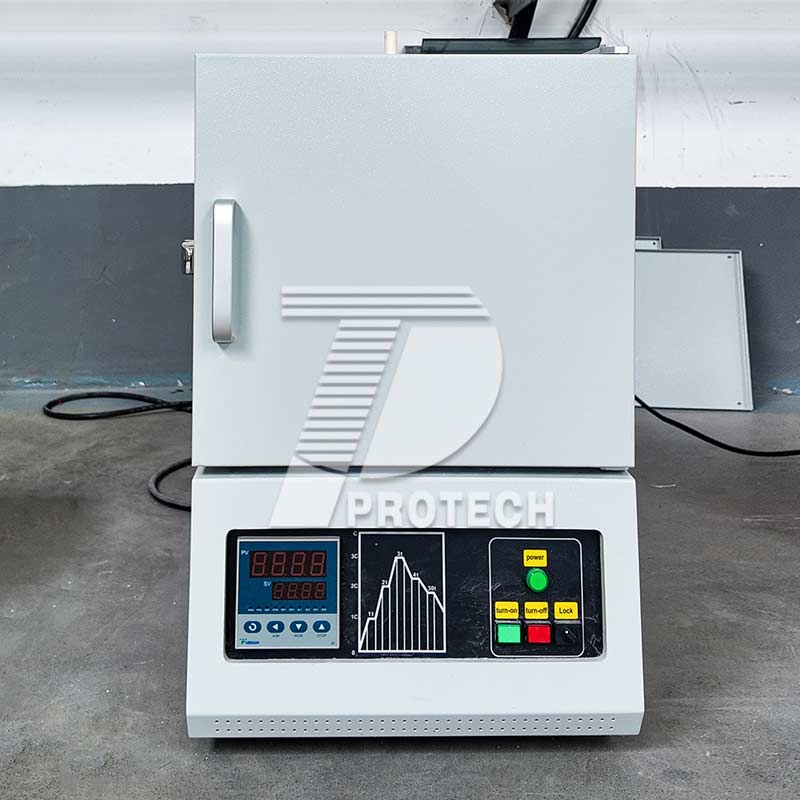
According to the sintering characteristics of inorganic materials, common furnace types include box-type electric furnaces, tube-type electric furnaces, well-type electric furnaces, and atmosphere-controlled electric furnaces. For the sintering of oxide ceramics (such as Al₂O₃, ZrO₂), resistance wire-heated box-type electric furnaces can be selected, with a temperature control accuracy of ±1℃ being sufficient to meet the requirements. For materials requiring inert atmosphere protection such as nitrides (e.g., Si₃N₄) and carbides (e.g., SiC), tube-type atmosphere-controlled electric furnaces with strong airtightness should be prioritized, equipped with argon/nitrogen purification systems to avoid sample oxidation. For the sintering of thin-film materials or small-batch powders, the vertical heating structure of well-type electric furnaces can ensure temperature uniformity and reduce performance differences between samples.frTMuffle Furnace,Tube Furnace,Vacuum Furnace,Atmosphere Furnac
frTMuffle Furnace,Tube Furnace,Vacuum Furnace,Atmosphere Furnac
2. Temperature Range and Heating Element AdaptationfrTMuffle Furnace,Tube Furnace,Vacuum Furnace,Atmosphere Furnac
When the sintering temperature is below 1200℃, nickel-chromium alloy heating wire electric furnaces are optional, featuring low cost and convenient maintenance. For medium-temperature sintering scenarios (1200-1600℃) such as glass annealing and low-melting-point ceramic sintering, molybdenum wire or silicon carbide rod-heated electric furnaces are recommended. For high-temperature sintering above 1600℃ (such as special ceramics and refractory materials), high-temperature electric furnaces with tungsten wire or graphite heating must be selected, while paying attention to the high-temperature resistance of furnace insulation materials (e.g., alumina fiber, graphite felt).frTMuffle Furnace,Tube Furnace,Vacuum Furnace,Atmosphere Furnac
frTMuffle Furnace,Tube Furnace,Vacuum Furnace,Atmosphere Furnac
3. Temperature Control System and Intelligent ConfigurationfrTMuffle Furnace,Tube Furnace,Vacuum Furnace,Atmosphere Furnac
University laboratories should prioritize digital display temperature-controlled electric furnaces with PID self-tuning function, supporting segmented setting of heating rate (0.5-20℃/min) to meet the sintering process requirements of different materials (such as low-temperature degreasing and high-temperature densification). Some high-end equipment can be equipped with computer communication interfaces to realize real-time monitoring and data recording of the sintering process, facilitating the traceability and repeatability of experimental results.
muffle furnace, box furnace
frTMuffle Furnace,Tube Furnace,Vacuum Furnace,Atmosphere Furnac
III. Regulation of Sintering Process Parameters: Ensuring Material PerformancefrTMuffle Furnace,Tube Furnace,Vacuum Furnace,Atmosphere Furnac
1. Heating Rate ControlfrTMuffle Furnace,Tube Furnace,Vacuum Furnace,Atmosphere Furnac
Excessively fast heating rate is likely to cause thermal stress inside the sample, leading to cracking and deformation; excessively slow rate will prolong the experimental cycle and reduce efficiency. For samples containing organic binders, a low-speed heating section (1-3℃/min) should be set in the range of 200-600℃ to ensure the full decomposition and volatilization of the binder, avoiding residual impurities affecting material performance. In the high-temperature sintering stage, the heating rate can be appropriately increased (5-10℃/min) to shorten the heating time before heat preservation.frTMuffle Furnace,Tube Furnace,Vacuum Furnace,Atmosphere Furnac
frTMuffle Furnace,Tube Furnace,Vacuum Furnace,Atmosphere Furnac
2. Optimization of Holding Temperature and TimefrTMuffle Furnace,Tube Furnace,Vacuum Furnace,Atmosphere Furnac
The holding temperature should be determined according to the phase diagram and sintering characteristics of the material, usually 50-100℃ higher than the sintering temperature of the material to promote particle diffusion and densification. The holding time needs to balance material density and grain growth: insufficient holding time will result in inadequate sintering and low density; excessively long holding time will cause abnormal grain growth and reduce material mechanical properties. Generally speaking, the holding time for powder materials is 1-3 hours, and for bulk materials is 3-6 hours, which needs to be optimized through experiments.frTMuffle Furnace,Tube Furnace,Vacuum Furnace,Atmosphere Furnac
frTMuffle Furnace,Tube Furnace,Vacuum Furnace,Atmosphere Furnac
3. Atmosphere and Pressure RegulationfrTMuffle Furnace,Tube Furnace,Vacuum Furnace,Atmosphere Furnac
Oxidizing atmosphere sintering is suitable for oxide materials, and air can be directly introduced. Reducing atmosphere (such as hydrogen, carbon monoxide) must be carried out in a special sealed electric furnace, equipped with gas purity detection and explosion-proof devices to ensure experimental safety. Inert atmosphere (argon, nitrogen) is used to protect oxidation-prone materials, with a gas flow rate controlled at 100-300mL/min to maintain a slight positive pressure in the furnace and prevent air infiltration. For high-pressure sintering scenarios, high-pressure atmosphere-controlled electric furnaces should be selected, with a pressure range usually of 0.1-10MPa to improve the material densification rate.frTMuffle Furnace,Tube Furnace,Vacuum Furnace,Atmosphere Furnac
frTMuffle Furnace,Tube Furnace,Vacuum Furnace,Atmosphere Furnac
IV. Operation Specifications and Safety PrecautionsfrTMuffle Furnace,Tube Furnace,Vacuum Furnace,Atmosphere Furnac
1. Pre-experiment PreparationfrTMuffle Furnace,Tube Furnace,Vacuum Furnace,Atmosphere Furnac
Check whether the furnace door seal is intact, the heating element is in good condition, and the temperature control system is normal; lay crucibles (such as alumina crucibles, graphite crucibles) according to the sample characteristics to avoid direct contact between the sample and the furnace body; for atmosphere-controlled electric furnaces, the air in the furnace should be replaced in advance (usually by introducing inert gas for 3-5 minutes) to eliminate oxygen interference.frTMuffle Furnace,Tube Furnace,Vacuum Furnace,Atmosphere Furnac
frTMuffle Furnace,Tube Furnace,Vacuum Furnace,Atmosphere Furnac
2. Sintering Process MonitoringfrTMuffle Furnace,Tube Furnace,Vacuum Furnace,Atmosphere Furnac
During the experiment, real-time observe the operation status of the electric furnace, record the heating curve and atmosphere parameters. If abnormal temperature fluctuations, gas leakage and other conditions occur, stop the experiment immediately and troubleshoot. It is forbidden to open the furnace door when the electric furnace is in operation to prevent scalding by high-temperature radiation; if sampling is required midway, the operation can only be performed after the temperature drops below 200℃.frTMuffle Furnace,Tube Furnace,Vacuum Furnace,Atmosphere Furnac
frTMuffle Furnace,Tube Furnace,Vacuum Furnace,Atmosphere Furnac
3. Post-experiment TreatmentfrTMuffle Furnace,Tube Furnace,Vacuum Furnace,Atmosphere Furnac
After sintering, the furnace should be cooled according to the preset cooling program (natural cooling or segmented cooling) to avoid sample cracking caused by rapid cooling; after the furnace temperature drops to room temperature, take out the sample and clean the furnace cavity to remove residual impurities and volatiles; turn off the power supply and gas valve, and complete the equipment usage record.frTMuffle Furnace,Tube Furnace,Vacuum Furnace,Atmosphere Furnac
frTMuffle Furnace,Tube Furnace,Vacuum Furnace,Atmosphere Furnac
V. Equipment Maintenance: Extending Service LifefrTMuffle Furnace,Tube Furnace,Vacuum Furnace,Atmosphere Furnac
1. Daily MaintenancefrTMuffle Furnace,Tube Furnace,Vacuum Furnace,Atmosphere Furnac
Clean the furnace cavity after each experiment to avoid impurity accumulation affecting heating uniformity; regularly check the wear of heating elements and replace them in a timely manner if they are broken or aged; keep the temperature control sensor (thermocouple) clean and avoid contact with corrosive substances.frTMuffle Furnace,Tube Furnace,Vacuum Furnace,Atmosphere Furnac
frTMuffle Furnace,Tube Furnace,Vacuum Furnace,Atmosphere Furnac
2. Regular CalibrationfrTMuffle Furnace,Tube Furnace,Vacuum Furnace,Atmosphere Furnac
Calibrate the temperature control accuracy of the electric furnace every 6-12 months, compare it with the equipment display temperature using a standard thermometer, and correct the deviation; check the airtightness of the atmosphere system, replace aging seals and pipelines to ensure stable gas delivery.frTMuffle Furnace,Tube Furnace,Vacuum Furnace,Atmosphere Furnac
frTMuffle Furnace,Tube Furnace,Vacuum Furnace,Atmosphere Furnac
3. Long-term StoragefrTMuffle Furnace,Tube Furnace,Vacuum Furnace,Atmosphere Furnac
If the equipment is idle for a long time, cut off the power supply and gas source, keep the furnace cavity dry and clean, and place desiccants in the furnace to prevent moisture; preheat it regularly (once every 3 months) to avoid aging of heating elements and insulation materials.frTMuffle Furnace,Tube Furnace,Vacuum Furnace,Atmosphere Furnac
frTMuffle Furnace,Tube Furnace,Vacuum Furnace,Atmosphere Furnac
VI. ConclusionfrTMuffle Furnace,Tube Furnace,Vacuum Furnace,Atmosphere Furnac
As the core equipment of university inorganic material laboratories, the rationality of selection, accuracy of parameter regulation, and standardization of operation of electric furnaces directly determine the success or failure of sintering experiments and the stability of material performance. University researchers should scientifically select equipment types, optimize sintering process parameters, and strictly abide by operation specifications and maintenance requirements in combination with research directions and material characteristics, so as to give full play to the technical advantages of electric furnaces and provide reliable guarantee for the basic research and application development of inorganic materials. In the future, with the promotion and application of intelligent and high-precision electric furnaces, inorganic material sintering technology will develop in the direction of high efficiency, energy saving and environmental protection, injecting new momentum into university scientific research innovation.frTMuffle Furnace,Tube Furnace,Vacuum Furnace,Atmosphere Furnac
frTMuffle Furnace,Tube Furnace,Vacuum Furnace,Atmosphere Furnac
Zhengzhou Protech Technology Co.,LTD is a professional manufacturer specializing in tube furnaces, muffle furnaces, atmosphere furnaces, and vacuum furnaces. We are committed to providing targeted solutions to meet your diverse heating equipment needs.frTMuffle Furnace,Tube Furnace,Vacuum Furnace,Atmosphere Furnac
For customized heating solutions tailored to your specific requirements, feel free to get in touch with us:frTMuffle Furnace,Tube Furnace,Vacuum Furnace,Atmosphere Furnac
WhatsApp: +86 17719806024frTMuffle Furnace,Tube Furnace,Vacuum Furnace,Atmosphere Furnac
Email: info@lab-furnace.com